
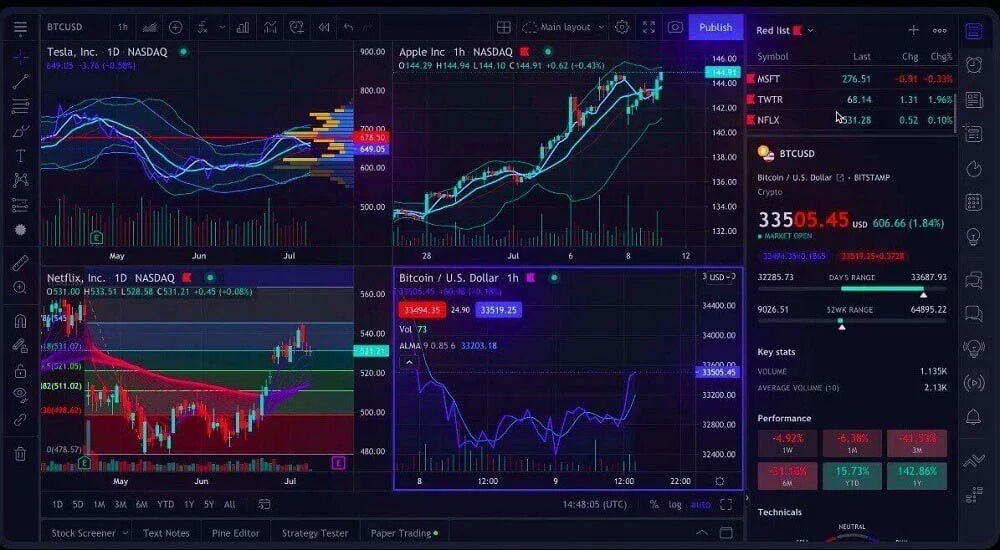
The allure of complexity in trading is hard to resist, especially early on, when each new indicator feels like a missing piece finally found. The logic seems sound at first: more information should produce better decisions. What more often occurs is that additional layers of data generate conflicting signals that paralyze judgment rather than sharpen it. A trader monitoring eight indicators across three timeframes is no better informed than one working with two well-understood tools. In most cases, that trader is simply more confused, and the confusion masquerades as sophistication.
The minimalism argument is not philosophical. It is practical. When a trader strips away unnecessary indicators and lets price dominate the chart, something changes perceptually. Levels become clearer. The relationship between candles becomes easier to read. Decisions that once felt tentative begin to feel grounded in something real rather than the consensus of multiple signals that, in most cases, derive from the same underlying data. Traders who have made that transition consistently describe it as clarifying rather than restrictive, as though the noise had been obscuring something that was always present.
TradingView charts lend themselves naturally to this kind of stripped-back approach. The platform allows traders to save clean templates, switch between minimal and detailed views, and adjust the visual weight of every element. A trader might run nothing more than a volume indicator and two key horizontal levels marked the previous evening. That arrangement, spare as it looks, distills hours of prior analysis into a visual space where the only remaining question is how price behaves when it reaches those levels. The preparation is complete; the chart at session open simply reflects its conclusions.
Minimalism also has an underestimated impact on emotional regulation during live trading. An overcrowded chart produces a form of low-grade cognitive noise that compounds under stress. When price moves against a position, scanning multiple conflicting signals in search of reassurance adds to the mental load in a way that produces premature exits or irrational position-holding. Cleaning up the visual space does not eliminate the emotional difficulty of holding a losing trade, but it reduces the number of competing inputs demanding attention at precisely the moment when clear thinking matters most. One trader who switched to a two-indicator setup noted that the first month felt uncomfortable with less apparent confirmation available, and the second was the most consistent of their trading career.
The discipline required to maintain a bare-bones setup is itself a form of edge development. Traders who maintain a clean workspace also resist the temptation to add indicators back after a losing period. That resistance is meaningful. It reflects an understanding that the losing streak was not caused by a lack of indicators, and that introducing complexity to counteract drawdown is a behavioral impulse, not a strategic advantage. That discipline is what trains a trader to trust the process rather than the noise.
The process of revisiting and refining what stays on the chart is one that never reaches a final state. The goal is not to lock in a minimal setup and leave it unchanged indefinitely. Markets evolve and so does the trader’s skill level, and the tools that serve a developing trader may not be the same ones that serve an experienced one. The only constant is the principle: everything on TradingView charts must contribute something that price alone cannot provide, and anything that merely confirms what is already visible has no place on it.