
Ever wondered why modern sim racing feels almost indistinguishable from real-life driving? The secret lies in cutting-edge physics engines that breathe life into every curve, collision, and gear shift. From tyre grip to aerodynamic downforce, these systems turn digital racing into pure realism. Let’s uncover how technology is redefining the thrill of the track.
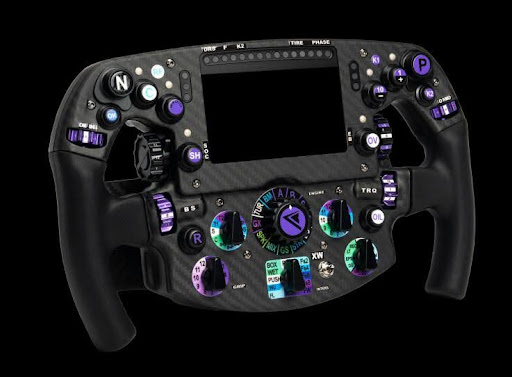
Modern sim racing has transformed into a deeply immersive experience, blending technology, physics, and precision engineering. What sets it apart from casual racing games is realism—the sense that every movement of the car mirrors what would happen on an actual racetrack. This realism is made possible by physics engines, the invisible systems that calculate forces, motion, and reactions behind the scenes. With advanced hardware like the Conspit Steering Wheel, these digital simulations now feel astonishingly close to real-world driving.
Physics engines are the heart of any racing simulator. They control how cars accelerate, brake, drift, and collide, relying on mathematical models of real-world physics. By processing vast amounts of data in real time, these engines create driving experiences that respond authentically to every driver input. Whether you are navigating tight corners or adjusting to wet track conditions, the car behaves exactly as it would on asphalt.
The Core of Realism: Dynamic Car Behaviour
The realism in sim racing comes from accurately modelling how vehicles respond to environmental conditions. Every aspect—from tyre pressure to suspension stiffness—is calculated dynamically. A powerful physics engine considers these factors simultaneously, delivering lifelike feedback to the player. When paired with the Conspit Steering Wheel, drivers can feel each vibration and force change as if gripping a real steering column.
This sense of authenticity is achieved through data-driven precision. Developers use telemetry from real race cars to fine-tune in-game performance. The result is an evolving simulation where grip, balance, and inertia all react to speed, weather, and track texture. Unlike traditional arcade racing, no two laps feel identical—because, just like in real life, they aren’t.
Tyre Physics: Where the Road Meets the Code
Tyre behaviour defines how a car handles, and it’s one of the most complex elements of a physics engine. Real tyres deform, heat up, and lose traction over time, and advanced simulators replicate all these details. The engine calculates surface friction, pressure distribution, and heat generation in milliseconds, giving drivers an authentic sense of grip and control. When you push the car too hard into a corner, the slip feels natural because the virtual tyre reacts just like a real one.
Weight Transfer and Suspension Dynamics
Weight transfer occurs whenever a car accelerates, brakes, or turns. In physics engines, this shifting mass affects stability and traction. The simulation determines how much weight moves between tyres, influencing how the vehicle behaves under stress. High-quality simulators even model suspension compression and rebound, creating a realistic rhythm between car and road. This subtle movement builds a connection between the driver and the virtual car, mirroring how professional racers sense vehicle feedback.
Aerodynamics and Downforce Effects
Another critical component is aerodynamics. Real race cars rely on airflow to generate downforce, increasing grip at high speeds. Sim racing engines model these aerodynamic forces in detail. As the car speeds up, the engine calculates drag and lift changes, adjusting handling in real time. When driving through fast corners, players can feel how downforce pins the car to the track—a sensation that makes virtual racing truly exhilarating.
The Role of Environmental Physics
True realism doesn’t stop at the car. Environmental physics brings the surrounding world to life. Rainfall alters grip, wind changes stability, and even track temperature affects tyre performance. Modern simulators process these factors simultaneously, ensuring conditions evolve throughout the race. This dynamic world challenges drivers to adapt, think strategically, and respond to unpredictability—just like in real motorsport.
Hardware Synergy: Where Physics Meets Feel
A physics engine can only go so far without responsive hardware. Force-feedback steering systems, high-quality pedals, and tactile motion platforms translate virtual forces into physical sensations. The Conspit Steering Wheel exemplifies this connection, offering precise resistance and vibration feedback that aligns perfectly with the simulated data. This integration bridges the gap between digital racing and physical experience, allowing drivers to intuitively feel every skid, bump, and oversteer.
Continuous Advancements in Simulation Technology
As computing power grows, physics engines continue to evolve. Developers now employ real-time data from motorsport teams, advanced algorithms, and machine learning to refine how simulations respond. Future engines will likely replicate even finer details, from microscopic tyre wear to driver fatigue effects. The line between simulation and reality is blurring faster than ever, pushing the boundaries of what sim racing can achieve.
Why It Matters for the Future of Motorsport
Sim racing isn’t just entertainment—it’s a serious training tool for professionals and enthusiasts alike. Many racing teams now use simulators to develop strategies and test setups before hitting the track. The realistic feedback produced by these physics engines helps drivers improve reflexes, precision, and mechanical understanding. As technology advances, this virtual environment may soon become an essential component of motorsport education and competition.
Closing Remarks
Physics engines are the invisible force powering the realism of sim racing. They replicate the physical laws governing motion, friction, and energy with remarkable detail, turning a digital hobby into a deeply authentic experience. With innovations in hardware like the Conspit Steering Wheel and continuous software evolution, the world of sim racing is now closer than ever to real-world racing. For drivers, that means not just playing the game—but living it.